
Searching the Madison County Court Docket
The North Carolina Judicial Branch Portal is the place to start. Madison is an eCourts county. Its Smart Search tool can return eligible public case information with a case number or a name entered last-name, first-name order. Too many results? Add the Madison location filter, a case type, a status, or a filing-date range. Anonymous searching is available. Signing in only adds the option to save cases in My Cases.
Have exact details ready first. A case number is strongest. A citation number, a name in the right order, or a known filing period also helps. In the results, click the underlined case number to open the public Case Summary or Register of Actions. That summary reflects entries from the clerk's official record. It is not a certified copy.
- Open Portal and select Smart Search.
- Enter a record number or a name, then submit the search.
- Use Madison as the location and add a case type or date range if the result set is broad.
- Select the underlined case number to open the available Case Summary, events, hearings, and disposition information.
- Contact the Clerk of Superior Court when the record is paper-only, restricted, missing, or needed as an official copy.
Note: Portal can still return no match. The search term may be incomplete, the record may be restricted, or the official file may hold material that remains only at the clerk's counter.
Madison County Portal Search Steps
Portal is the public online channel for eligible eCourts matters in Madison County. It is not a separate county database.
Lookup and filing are separate jobs. Smart Search finds available court information. Filings go through North Carolina eCourts File & Serve instead. That split matters, because someone who only wants to read a Madison County court docket should not expect the filing screen to act as a public index.
The official Portal training material shows that an underlined result number opens the Case Summary. Available panels there can include case information, assignment information, parties, case events, dispositions, hearings, financial information, and public documents. Not every case has every panel. A panel appears only where public information exists.
The North Carolina eCourts page documents the statewide system behind Madison's portal access.
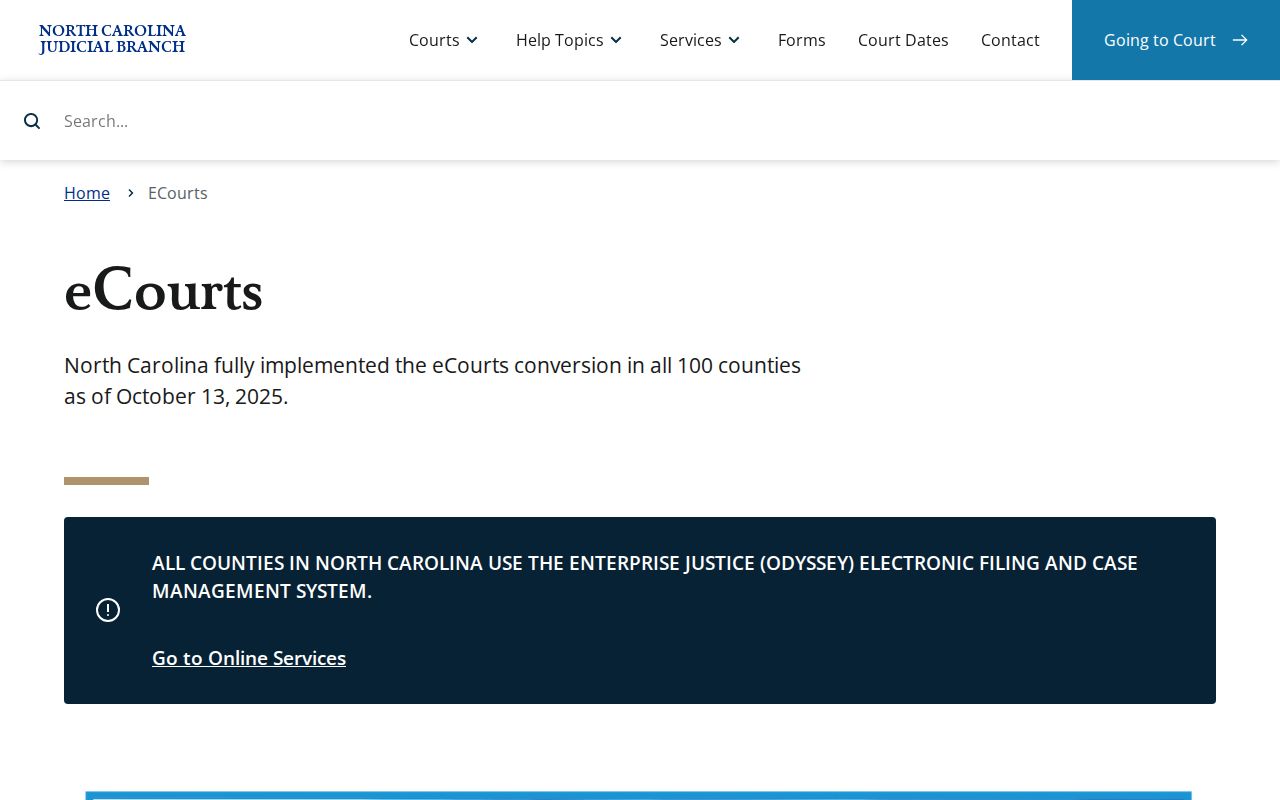
That rollout explains the change. Madison County online docket searching now begins in Portal rather than a separate county database.
Inside a Madison County Court Docket
North Carolina labels the online docket view a Case Summary or Register of Actions. It is a structured public summary. It is not a case narrative. Use it to identify the case and follow the sequence of public events. Check for a listed hearing. Find a disposition or financial block when the system offers one. Redaction and statutory restrictions still limit what the public sees.
| Case Number | The searchable identifier. Enterprise Justice uses year, case type, six-digit sequence, and a county identifier, such as 21CR000007-910 in the official system example. |
|---|---|
| Case Information | Basic case-level details when Portal makes them available. |
| Case Events | A chronological record of public procedural activity, not necessarily the current hearing instruction. |
| Hearings | Current hearing information when it exists in the public record. |
| Disposition | A listed result or outcome category that should be read with its event context. |
| Documents | Available public documents only; a missing image does not prove that the clerk has no paper file. |
A Case Summary can answer an immediate docket question. The filing, order, or certified copy behind an event may still require the clerk.
Madison County Case Number Clues
A Madison County docket search works best with the complete number. Find it on a citation, order, or Portal result. Start there.
Portal's documented Enterprise Justice format packs four parts together: a filing year, case-type letters, a six-digit sequence, and a county identifier. The sample 21CR000007-910 shows the pattern. Do not use it to guess the suffix for every Madison matter. Copy the real number whenever possible. Use a citation, notice, order, or a reliable Portal result.
Case-type letters offer a clue. The official guide keeps codes such as CVD for Civil General, CVM for Civil Magistrate, CVS for Civil Superior, T for Civil Transcript, M for miscellaneous civil judgments, R for registration, and E for estates. A code is only a clue. The Case Summary and the clerk's record supply the real context.
- Case event
- A dated procedural entry in the chronological court history.
- Disposition
- A recorded result or status category that needs the surrounding case details.
- Hearing
- A scheduled court event, shown only when hearing information is available.
- Certified copy
- A clerk-authenticated court record, different from an informational Portal display.
Courts That Keep Dockets in Madison County
Madison sits inside North Carolina's unified General Court of Justice. The system is statewide. One office keeps the local records. The Madison County Clerk of Superior Court serves as record custodian across both the Superior and District Court divisions. Court context matters, though. A felony, a traffic infraction, a small claim, and an estate can all pass through the same local Portal and clerk channel while following different trial-division rules.
| Court or office | Docket coverage | Public search route |
|---|---|---|
| Superior Court, District 35 | Felony criminal matters, major civil matters, and qualifying District Court criminal appeals. | Portal for eligible public information; Clerk for paper files and certified copies. |
| District Court, District 35 | Misdemeanors, infractions, traffic, family matters, small claims, and other statutory District Court matters. | Portal, Search Hearings, the county calendar, and the unified Clerk. |
| Madison County Clerk of Superior Court | Official files, dockets, indexes, estates, special proceedings, and records kept across the trial divisions. | Public terminal, paper file review, copies, and certification as allowed by law. |
The state court structure overview explains the unified system.
A town office is not the custodian. Court case records for incorporated towns stay inside the state court structure, not with the town.
Madison County Court Calendar Paths
A Madison County court calendar has one focus. It shows the current location and time of a setting, while the docket records dated activity. Each tool does a different job. Portal's Search Hearings tool is built for the present. It starts with Location and Hearing Type, then accepts a search by case number, party name, business name, attorney name, attorney bar number, judicial officer, or courtroom. Two more official channels exist: the direct Madison civil calendar and the Madison criminal calendar.
The calendar pages rely on JavaScript. If a calendar will not load, use Search Hearings with Madison selected, check the Case Summary for context, and ask the clerk to resolve a close-date or paper-file issue. A current clerk or judge instruction controls over an older printout or a past event line.
Time-sensitive details go through the local clerk. The state Court Dates service points readers there too.
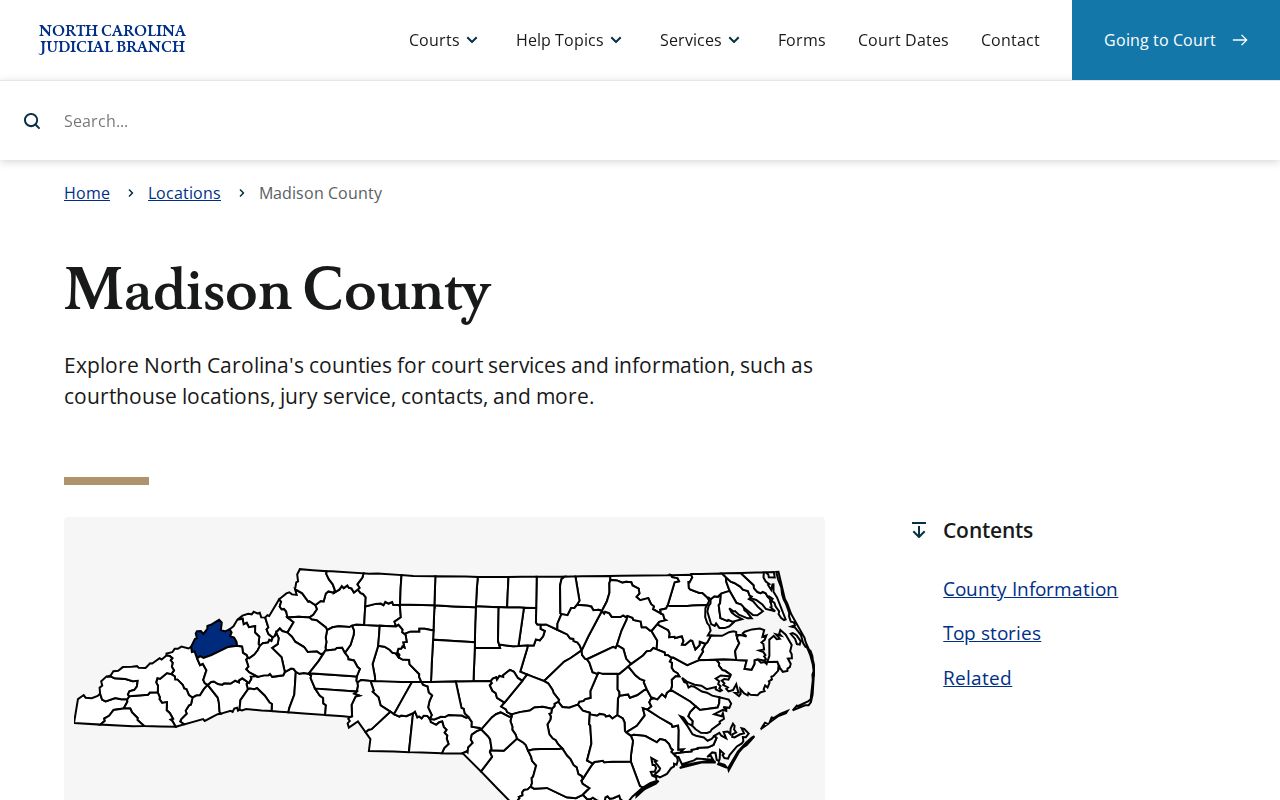
One hub ties it together. The county court hub links the local court, calendar, payment, rule, and Portal resources behind a full Madison County docket search.
How to Find Court Dates and Settings
Start with the newest citation, notice, or order. It usually names the next setting. Then run Search Hearings with the Madison location and a tight date range. Open the Case Summary too. A hearing block plus earlier case events can add useful context. The posted civil or criminal calendar works as one more check, mainly when a matter sits on a regular session.
Local timing terms can trip people up. In the 24th Judicial District's Superior civil process, a matter normally reaches the Ready Calendar five months after the last responsive pleading, unless good cause extends it. That is a calendar milestone only. It is not a promised trial date. In a felony case, an administrative setting is docket management under the local criminal docketing plan, not a finding or a sentence.
For a channel-by-channel approach, see the Madison County Court Dates page.
Madison County Digital and Paper Records
Madison County keeps a paper side to court records even now. Online case search arrived. It did not replace the clerk's file room. Madison joined the Track 9 eCourts rollout on July 21, 2025. Enterprise Justice, Portal, and eFiling reshaped the search path. Paper stayed paper, though. Under the transition guidance, documents that existed in paper at go-live remained available in paper form at the Clerk's Office. So an online docket result can sit beside a document you still need a clerk inquiry to see. For the temporary court and clerk location, the Madison County courthouse location page is the controlling source. That page shows the current arrangements.
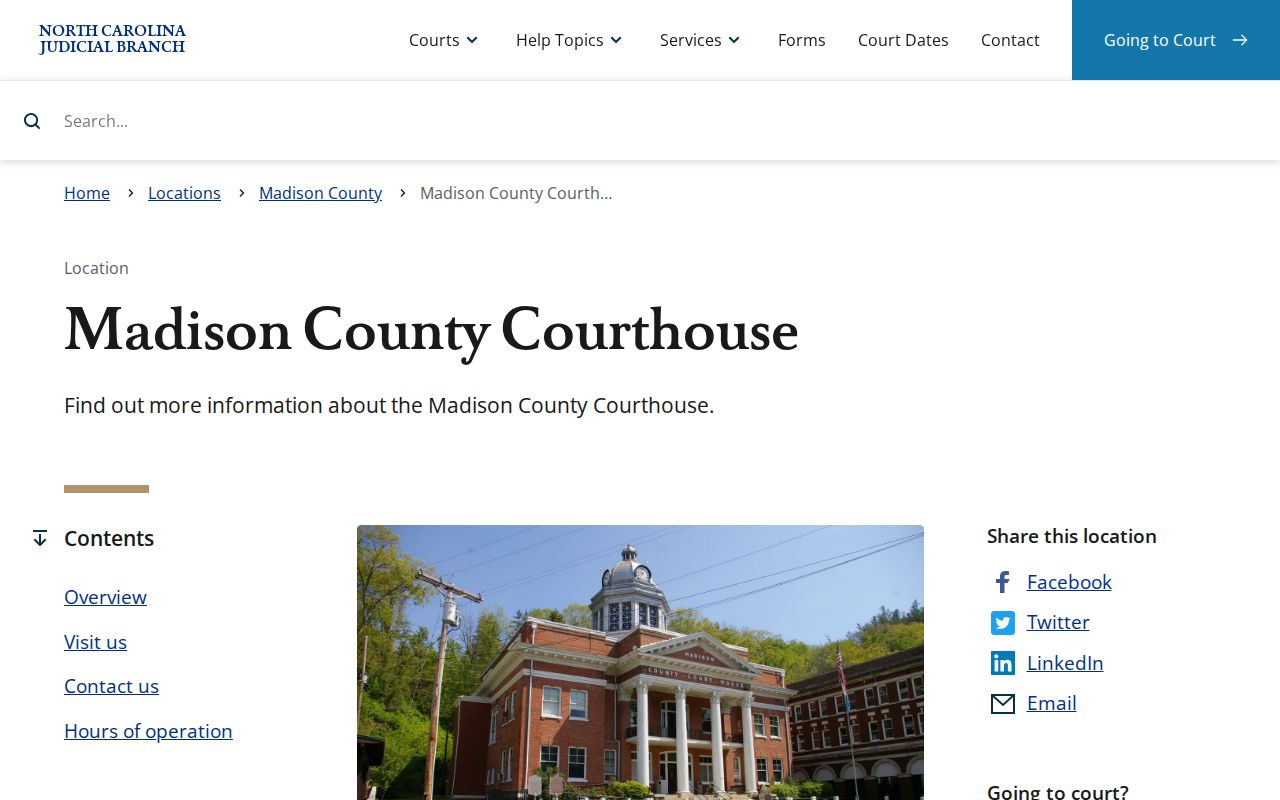
Old notices can mislead. An older notice that still names the historic courthouse address makes the location advisory especially important for anyone heading to a Madison County proceeding.
Public Access to Court Dockets
Public access has a local keeper and legal limits. The Clerk keeps records, files, dockets, and indexes, while Portal puts eligible public information online. A public search cannot open a restricted record. Nor does a Portal printout equal a certified court copy.
Key Rules:
G.S. 7A-109 requires clerks to keep court records and generally permits inspection during office hours unless access is prohibited by law.
North Carolina Public Records Law, Chapter 132 supplies the broader state public-record framework, but it does not change the Clerk's role as judicial-file custodian.
G.S. 7A-271 identifies Superior Court's criminal role, including qualifying District Court criminal appeals.
G.S. 7A-272 identifies District Court's role in nonfelony criminal matters and municipal-ordinance violations.
Use the clerk and court access rules for a court case file. The county government runs a separate executive-record request process. It is not a substitute for a judicial-file request.
Madison County Restricted Docket Rules
Any Madison County public search must respect the confidentiality boundaries built into the underlying Clerk record. Portal leaves out sealed, confidential, restricted, or sensitive material by design. The official guidance lists examples. Juvenile records are one. So are unreturned criminal warrants, certain protective-order records, confidential special proceedings, and documents containing protected information. Registering does not widen those boundaries. Elevated Access exists for users with legal authority and a verified business need. It is not for a general public docket search.
A no-result is not proof a case never existed. Check the spelling first. Then check the number format, location, and case type before giving up. If the question concerns a public Madison record, ask the clerk whether a paper file, an access rule, or another search path explains the result. Do not try to bypass a restriction through a broad county public-record request.
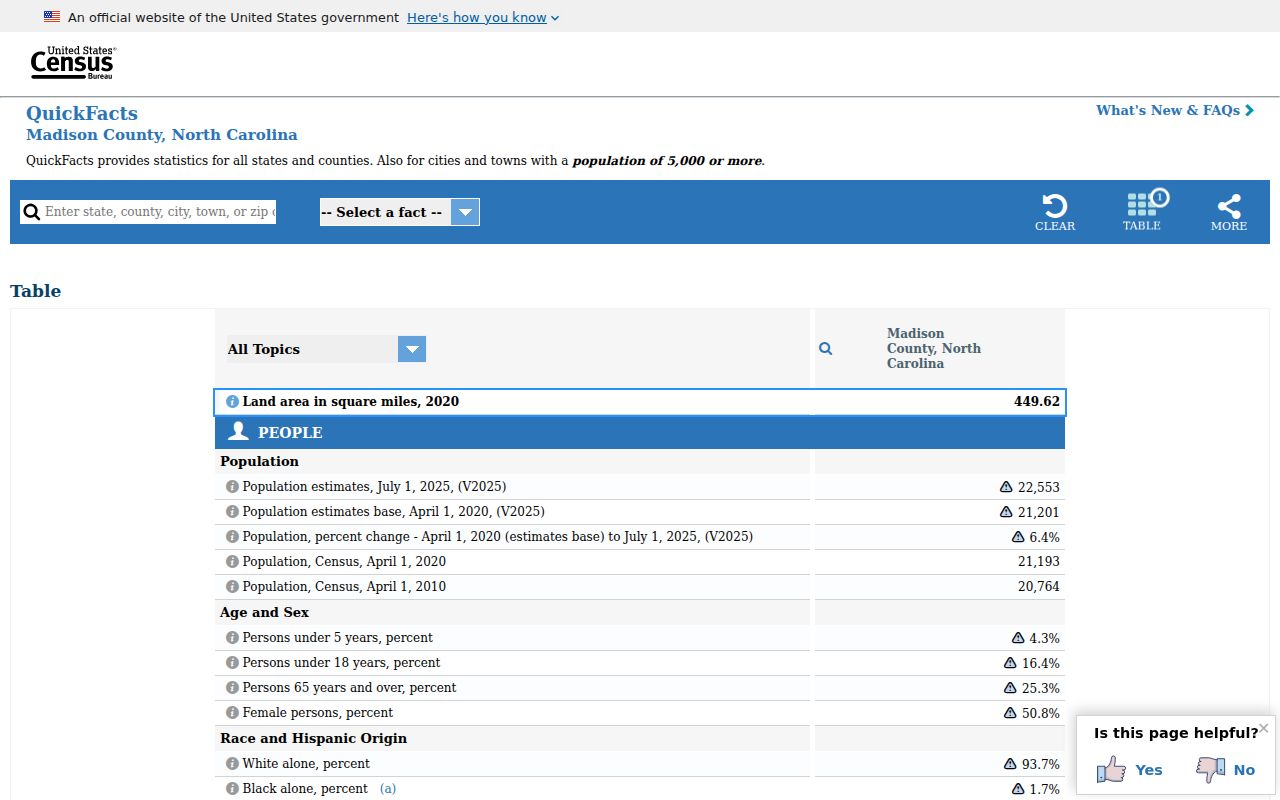
Madison County is small and rural. That makes an online-to-clerk fallback especially useful whenever a public search needs local confirmation.
Madison County Search Result Limits
One of the clearest fixes for a broad statewide name search is a Madison County location filter. Smart Search caps results. It returns no more than 200. A broad name search can bury the best match behind a result-limit warning. Enter a basic search term first. Then use Advanced Filtering Options. The Madison location, a filing-date window, a suitable case type, and a case status shrink the result set without guesswork.
Portal also documents wildcard rules. A case-number or business wildcard needs at least four characters plus an asterisk. A name wildcard needs three last-name letters and an asterisk, plus at least one first-name letter and an asterisk. Skip wildcards in the advanced Party Name selection; it limits results. One last note. A narrow search beats resubmitting the same broad query and hoping a relevant Madison County docket floats to the top.
Docket Records at the Clerk's Office
The Madison County Clerk channel is the right route for an official file, a public terminal question, or a Clerk-certified copy. One office holds the docket records. The Madison County Clerk of Superior Court is the official local custodian for both Superior Court and District Court records, not a separate county or town clerk per docket type. Staff can point to the public terminal, a paper file, the copy process, or the certification route. Older paper documents often bring people here. Portal documents that will not display are another reason. So are copies that must be official.
Madison County Clerk of Superior Court
258 Carolina Lane
Marshall, NC 28753
(828) 649-2200
The historic courthouse is closed. It sits at 2 N. Main Street and will stay closed until further notice. Check the court location page. It lists the temporary Clerk and court site at Carolina Lane and advises checking current conditions before a time-sensitive trip.
Madison County Court Dockets by City
Madison County has three incorporated towns in the official 2020 Census table. They are Mars Hill, Marshall, and Hot Springs. None runs its own docket portal. A town citation, ordinance matter, or other case generally flows through the countywide District Court, Clerk, and Portal channel. The city pages separate civic offices and local enforcement from the court record system. They invent no town court.
Mars Hill Docket Search
Population 2,007 in the 2020 Census. Mars Hill matters use the Madison County court and Clerk channel.
Marshall Docket Search
Population 777 in the 2020 Census. Marshall is the county seat, but not a separate municipal court system.
Hot Springs Docket Search
Population 520 in the 2020 Census. Hot Springs cases route to the county court and Clerk system.
The 2020 Census incorporated-places table supports the three-town list.
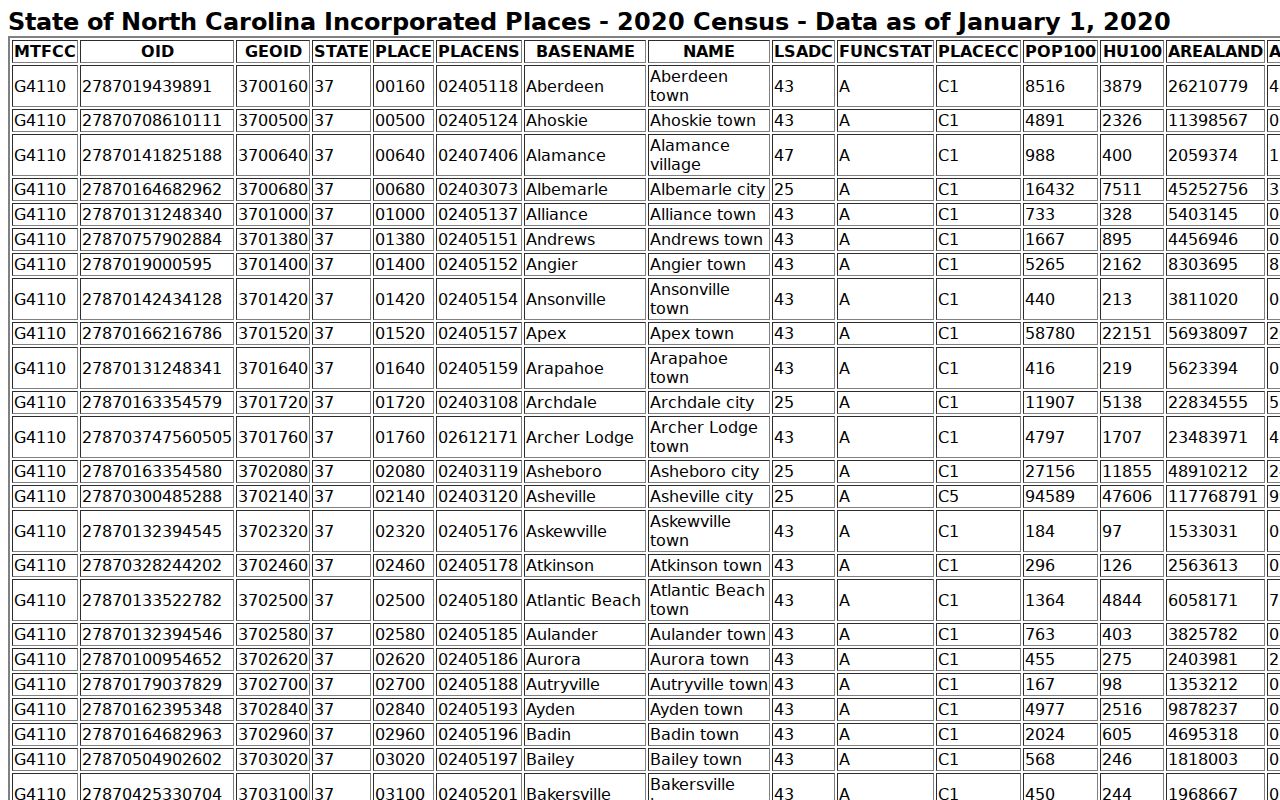
Just one municipal court exists here. So a town name on a traffic ticket points to the county court docket, not to a separate town clerk.
Madison County District Court Records
One Clerk of Superior Court keeps the records for every Madison County trial division. District Court and Superior Court files live in the same unified system. The same Portal serves both.
District Court is the everyday layer for most Madison County cases. Misdemeanors, infractions, traffic tickets, municipal-ordinance violations, small claims, and family matters all start there. Superior Court takes the felony cases. It also takes the major civil matters. One Clerk maintains both divisions. So read each Portal result with its case type and court in mind. The North Carolina District Court overview explains the state-level jurisdiction behind this countywide path. That path serves cases that begin in Madison's towns.
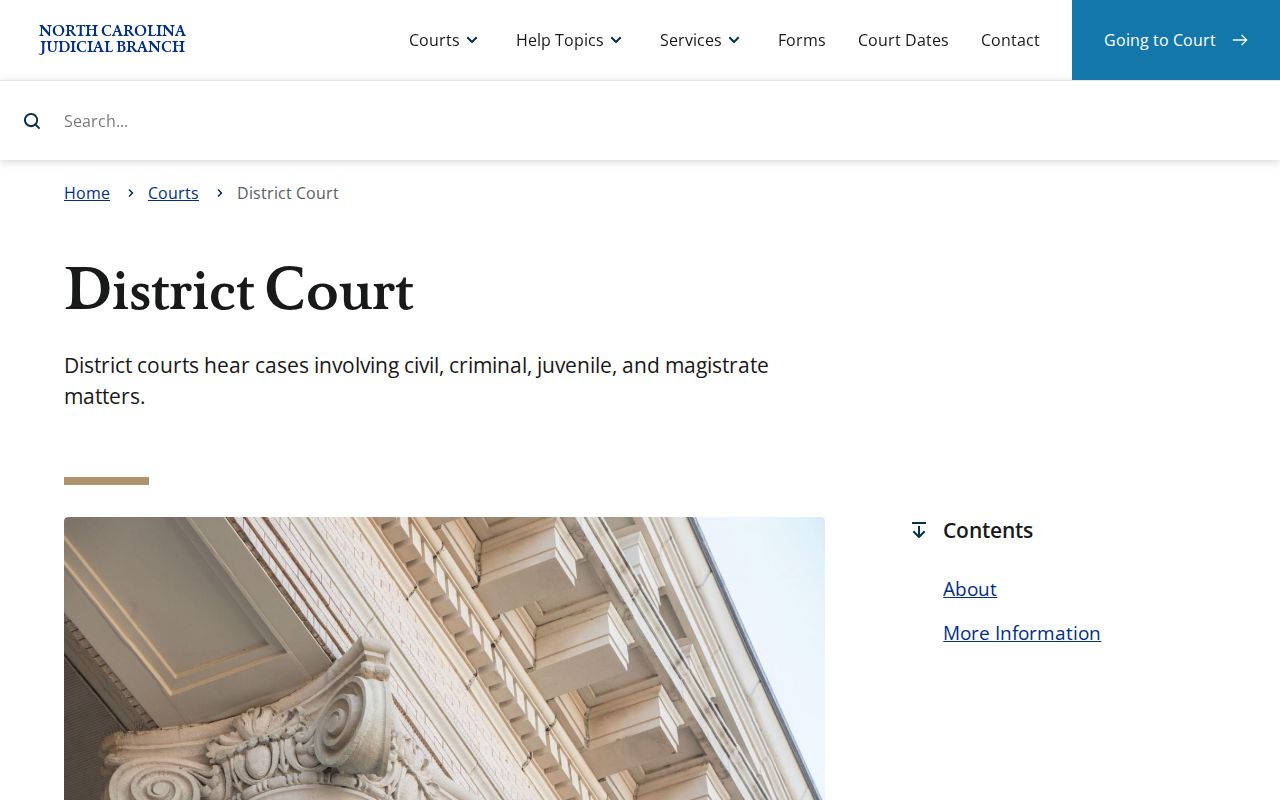
That broad local reach explains the pattern here. Traffic, misdemeanor, and town-originating cases in Madison County all flow into the state court docket, so no separate municipal databases exist.
Madison County Recovery Court Records
Madison County Recovery Court records work differently than people expect. The program is real. It was documented and implemented in 2018. But it runs on top of ordinary court records rather than beside them.
The 2025 state report covers program-level eligibility ranges and entry stages. It does not open a standalone public Recovery Court docket portal. An eligible underlying case may still show up in Portal. Program material itself stays under the same access restrictions as other court records.
That split prevents a common search mistake. A specialty program can matter a great deal in local court operations. But it does not create its own public, searchable case series. For live case access, use the available Case Summary and the Clerk's guidance. The North Carolina Superior Court overview gives the trial-division context. It covers felony matters and qualifying appeals.
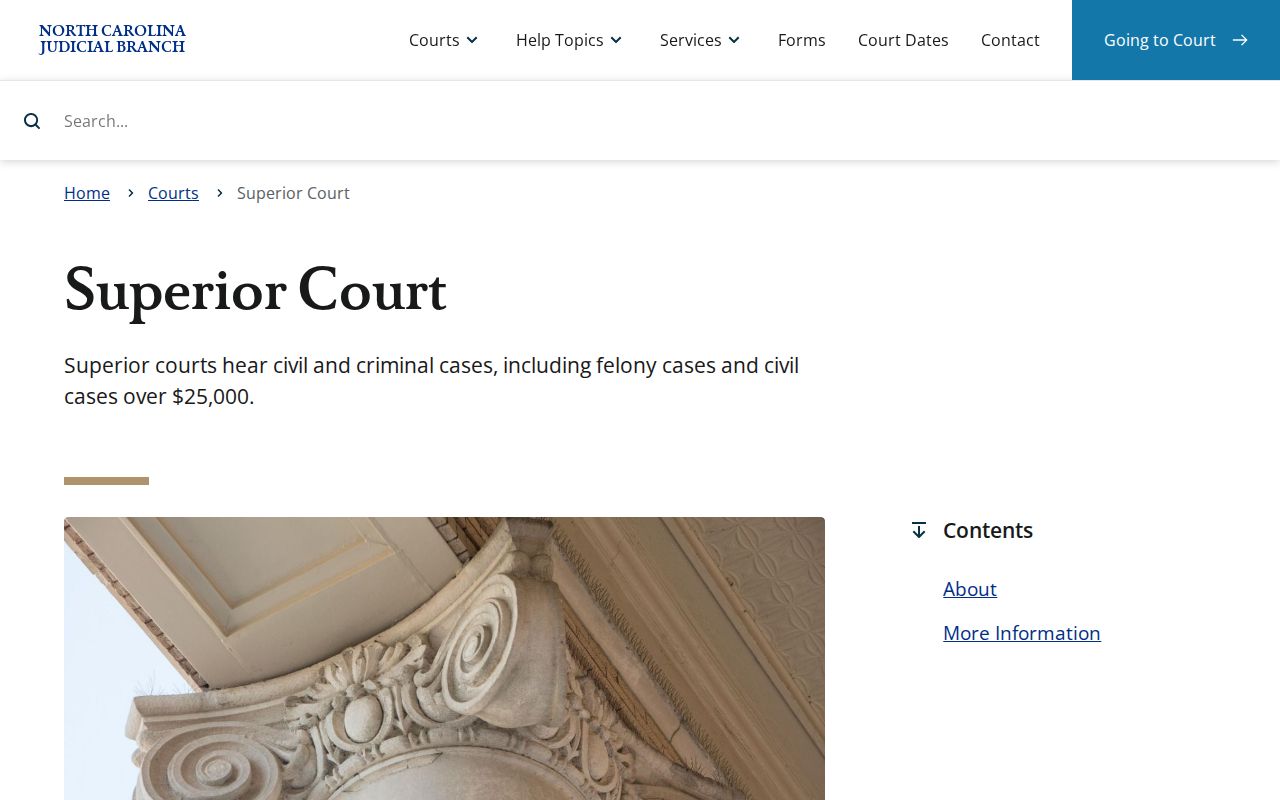
Superior Court context fits the felony and appeals side of the docket. Recovery Court details, though, stay a narrow program reference rather than a separate public docket search for Madison County.
Map and Directions to the Madison County Courthouse
Superior Civil, Superior Criminal, District Civil, and District Criminal sessions, along with the Clerk of Superior Court, currently sit at the Madison County Extension Office on Carolina Lane in Marshall, not at the historic courthouse on Main Street. The historic building at 2 N. Main Street has been closed since an October 2023 renovation began, and the Judicial Branch has not announced a reopening, so mail and navigation results pointing to the old Main Street address are out of date.
Madison County Temporary Courthouse and Clerk's Office
258 Carolina Lane
Marshall, NC 28753
(828) 649-2200
Weekdays, 8:30 a.m. to 5:00 p.m.
No official source describes parking, entry screening, or a public-terminal location at the Extension Office building, so calling the Clerk before a visit, especially one built around an old citation or directory listing, is the safer step. If a closure affects a scheduled session, the state's practice is to mail a new date rather than expect a walk-in reschedule.