
Searching Madison County Civil Dockets
Smart Search on the North Carolina Judicial Branch Portal is the statewide entry point for Madison eCourts civil cases. Enter a record number or a name in last-name, first-name order. Set the location to Madison. Pick a Civil Actions category when one fits. Narrow further with a case status or filing-date range. Clicking the underlined case number opens the Case Summary or Register of Actions, whichever is available. No account is needed. The search itself stays anonymous. A registered My Cases account saves cases for tracking. Yet it grants no extra access to a restricted court record. If a query comes back empty, check the name or number format. Loosen a tight filter. Then take any public-paper-file or record-custody question straight to the Madison Clerk.
- Open Smart Search and enter the case number or a properly ordered party name.
- Choose Madison County as the location before relying on a statewide name result.
- Select the narrowest available civil category, status, or filing period that fits the matter.
- Open the underlined case number to read available case information, events, hearings, dispositions, and financial information.
- Use the Clerk for an official copy or a paper-era document that the online record does not provide.
Madison County Civil Portal Categories
The Civil Actions filter is not one broad box. On the Portal, it breaks out Civil General, Civil Magistrate, Civil Foreclosure, Confession of Judgment, Bond Forfeiture, Non-Domestic Restraining Orders, and Summary Ejectment, among other categories. Family, Estates, Special Proceeding, Registration, and Wills Deposited for Safekeeping sit as separate selectable areas. Picking the closest category prevents you from reading a missing result as a missing case.
Case-number codes offer another clue. Portal materials document legacy civil type codes: CVD for Civil General, CVM for Civil Magistrate, CVS for Civil Superior, T for Civil Transcript, M for Miscellaneous Civil Judgments, R for Registration, and E for Estates. These codes point the way. But the assignment and events inside the record are what count.
Note: A broad name query can return statewide results. So add Madison before trusting a rare category or status filter on a docket search.
Inside a Madison County Civil Docket
A public Case Summary may display Case Information, Assignment Information, Party Information, Causes of Action, Case Events, Dispositions, Hearings, and Financial Information, each appearing only when content exists for that category. Causes of Action apply to civil, family, probate, and mental-health matters rather than to every docket type. And a visible event never guarantees a downloadable order, pleading, or judgment image.
| Case number | The structured Enterprise Justice identifier, which generally combines year, type, sequence, and county identifier. |
|---|---|
| Parties and assignment | Available public party and court-assignment information, subject to redaction and restriction rules. |
| Causes of action | Applicable civil, family, probate, or mental-health category information. |
| Case events | The dated history of filings, service, notices, motions, orders, and other recorded activity. |
| Disposition and hearings | Available outcome information and hearing data; use current calendar tools to confirm a live setting. |
For this Madison County civil docket image, the Madison County local rules and forms page is the source.
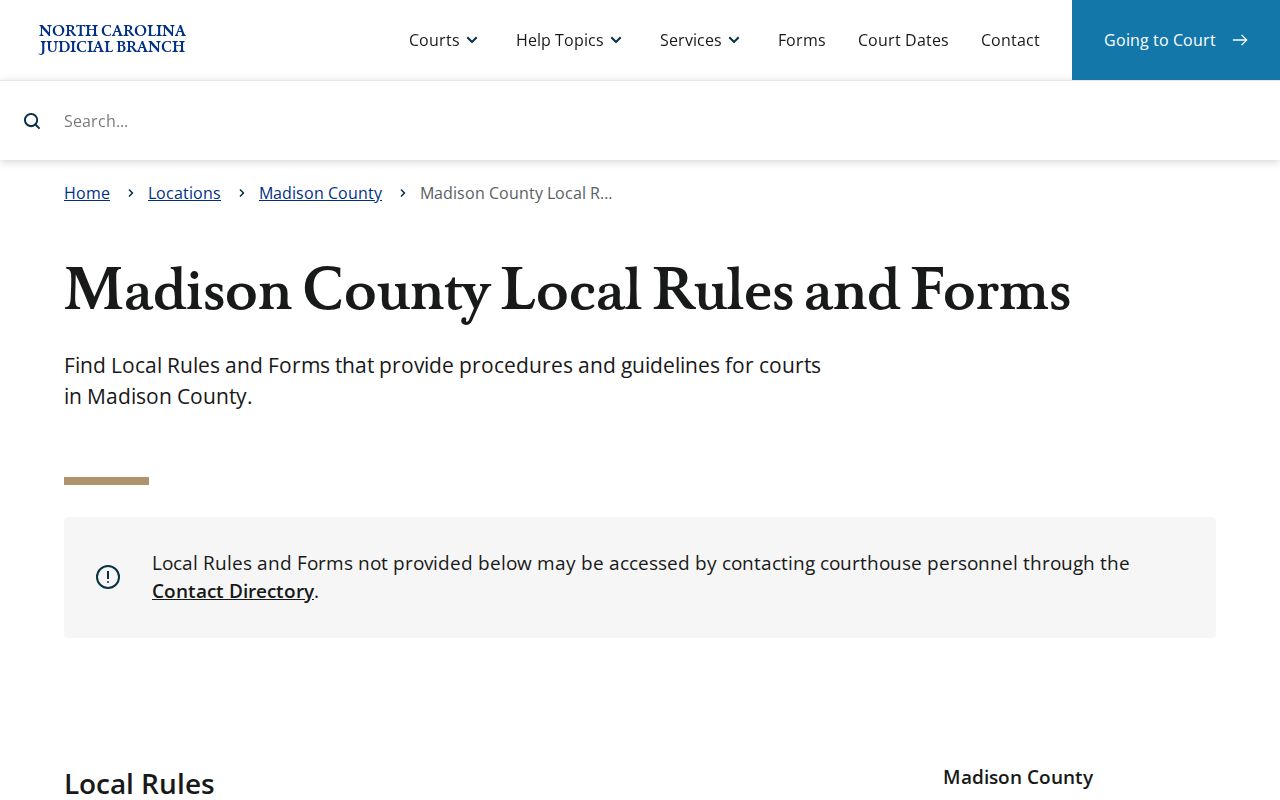
Local rules can shape case administration. Still, the Case Summary and the Clerk file remain the true record channels for an individual civil matter.
Madison County Civil Status Terms
A civil status label describes the state shown on the screen. It does not summarize every filed paper. Unserved means service is not complete in the displayed process. Stayed signals a pause. Reopened means later activity followed an earlier closing state. Transferred to Superior Court records a court-level move. Trial De Novo appears as a listed civil filter status on the docket.
- Disposed: Final Judgment No Trial
- A disposition label that does not itself provide the filed judgment image.
- Disposed: Trial by Judge or Jury
- A result label that should be read with the Case Summary and Clerk record.
- Disposed: Voluntary Dismissal
- A Portal term that identifies a type of recorded disposition, not a general inference about every claim.
Want the filed order, pleadings, or a certified copy behind a Portal event? Use the Madison Clerk's court-record channel rather than treating the status line as the complete document.
Civil Case Types on the Docket
Civil case routing in Madison County runs on more than one level. Under G.S. 7A-243, an action at or below $25,000 generally belongs in District Court. One above that amount generally belongs in Superior Court, subject to statutory exceptions. The Portal offers no amount filter. Money is one clue. It is not the whole answer. So the displayed case information and assignment still matter when you read a civil docket.
- Superior civil actions, including matters above the general statutory amount threshold.
- District Court civil actions within its ordinary jurisdiction.
- Civil Magistrate and small-claims matters filed through the Clerk channel.
- Foreclosure, judgment, bond-forfeiture, restraint, and summary-ejectment categories listed by Portal.
- Separate Family, Estates, Special Proceeding, Registration, and will-related categories.
G.S. 7A-243 is the source for this Madison County civil court-routing image.
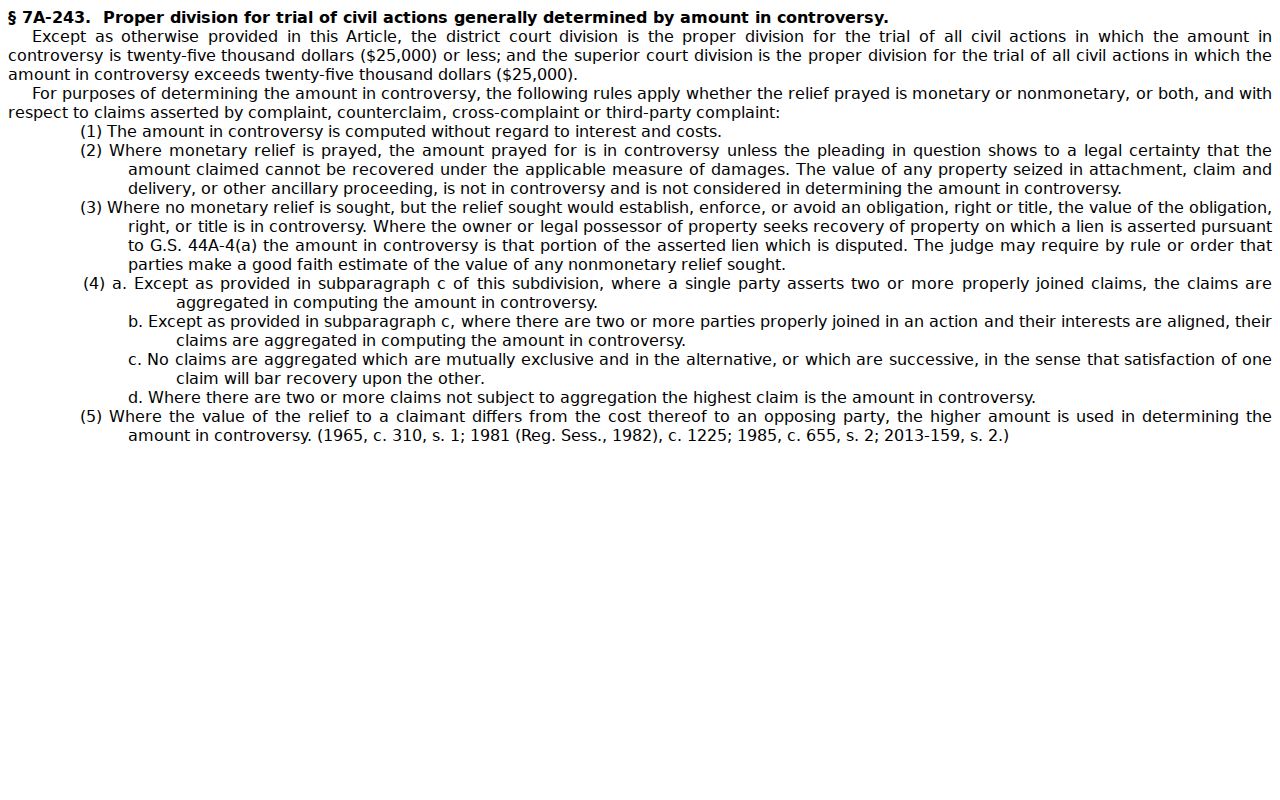
Magistrates sit within the District Court structure. Madison County posts no separate magistrate public docket portal, so magistrate civil matters show up through the same case lookup paths.
Madison County Civil Ready Calendar
The 24th Judicial District Superior Court civil plan covers Madison plus four neighboring counties. It tasks the Court Manager with maintaining the Ready Calendar. Each clerk should designate a Civil Calendar Clerk. A pending Superior civil case normally enters the Ready Calendar five months after the last responsive pleading. A scheduling order or the Senior Resident Judge can grant a good-cause extension instead.
Placement on the Ready Calendar is a docket milestone. It is not a trial date. A case can sit ready while the actual hearing or trial setting waits on later calendar administration. That is why the hearing tools, the current calendar, and Clerk confirmation each serve a different purpose.
Note: A Ready Calendar entry is an administrative milestone. It is not a final trial date.
Civil Docket Settings and Hearings
Four places can show a current Madison County civil setting. Try the Portal Case Summary's Hearings block, Portal Search Hearings, the Madison civil calendar, or a confirmation from the Clerk. In Search Hearings, pick the location and hearing type first. Then choose a search type like case number or party name. A live calendar result beats an old chronological entry. It gives you present time and place. A past event only tells you what already happened, not where the case sits now.
One caution: the civil calendar interface needs JavaScript in a modern browser. If the page will not load, comes back empty, or clashes with a notice or the Case Summary, run Portal Search Hearings. Then call the Clerk at (828) 649-2200. Court operations and the Clerk sit at 258 Carolina Lane, Marshall, NC 28753. The Madison County civil calendar service publishes the official calendar page this civil-docket image comes from.
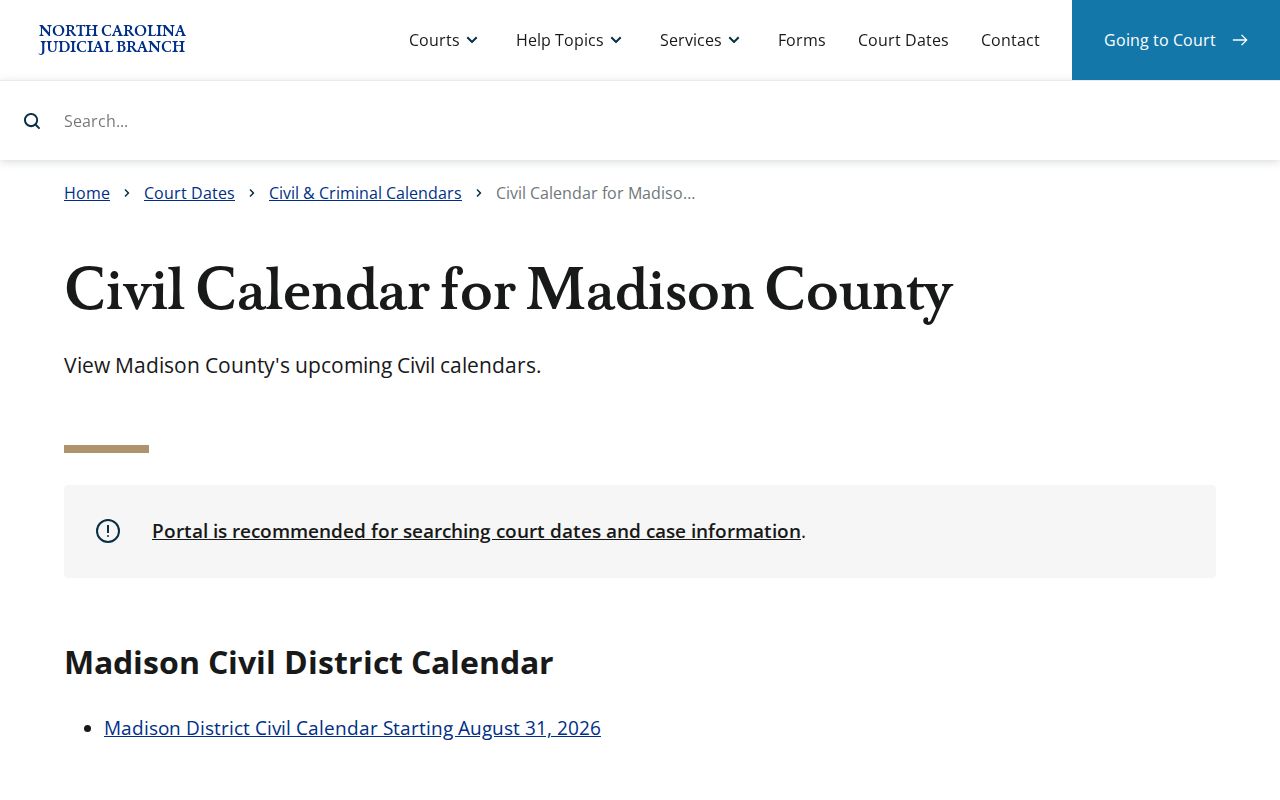
Trust the newest word. A revised court instruction or calendar beats an older printout or a setting you remember from an earlier court date.
Madison County Superior Civil Mediation
Madison County superior civil cases run on a scheduling order under the local plan. Parties get 21 days from the triggering filing or order to pick a mediator. Miss that window and the court may appoint one for you. Mediation should happen as soon as practical. It must come within 120 days after the order issues, absent approval. So a Madison County civil docket can fill up long before any trial. Scheduling, mediation, motion, hearing, and order entries pile up first.
Continuance requests face strong disfavor, trial dates especially, yet the rules never ban them outright. Filing a request changes nothing by itself. Confirm the live setting through the current calendar channels. Do not treat a motion as a date change. A scheduling or mediation deadline can sit in the record early. The court may set a final trial date much later. G.S. 7A-49.4 sets out the docket-management rules behind this Madison County image.
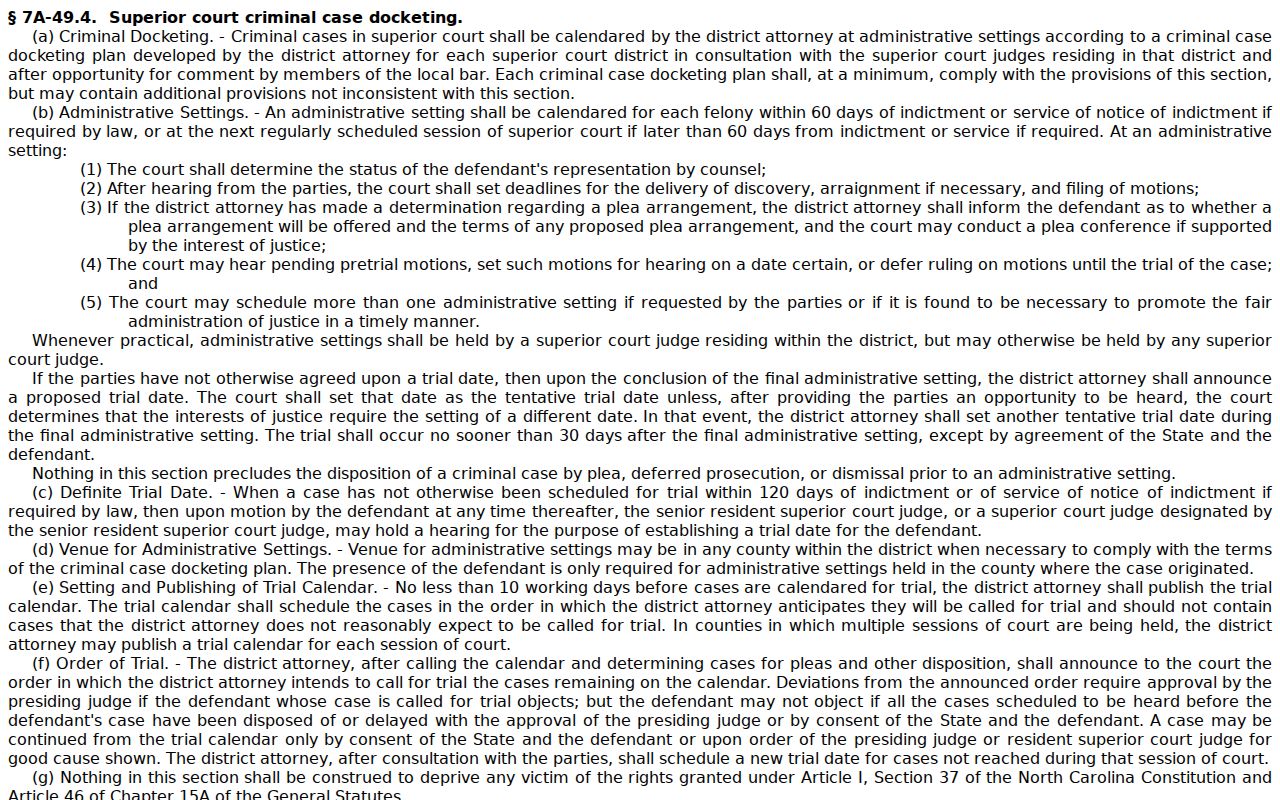
The statute sketches a broad docket-management concept. The Ready Calendar and mediation framework come from the separate local civil plan instead.
Civil Docket Access Rules
G.S. 7A-109 grounds the Clerk's record-keeping and public-inspection duties. The Portal carries public case information only; sealed or confidential records and sensitive documents stay out of reach for ordinary users, and registration grants no elevated access. When a document is missing from the Portal, the cause could be a public-access limit, conversion timing, upload processing, or a paper file still held at the Madison Clerk's office. Ask there before assuming the filing never happened.
Document access: A Case Summary is not a certified court record. For a public filed paper, plain copy, certified copy, or older paper-era document, ask the Madison County Clerk of Superior Court about the lawful record process and current fees.
Madison moved onto Track 9 eCourts on July 21, 2025. Paper documents from before go-live stayed with the Clerk, which keeps a valuable access route open after a Portal search.
Madison County Civil Magistrate Records
Small-claims cases start in the Clerk of Superior Court's office. A magistrate usually presides over the trial itself. State materials put the local maximum somewhere between $5,000 and $10,000. No Madison-specific figure appears in them. The Clerk, the Portal, and any paper file remain the right places to check. Use those for the real number.
The Clerk sets the first small-claims court date when the action is filed. State guidance says those dates normally land within 30 days. A tighter window applies to certain expedited possession cases. A civil event history can show service, an answer, or a hearing. It can also show a judgment or appeal activity. Still, confirm the current setting in the live court channels before you rely on it. North Carolina small-claims information from the state courts explains the rules. Those rules sit behind this Madison County civil docket image.
A small-claims appeal moves into District Court. That route is separate from the criminal appeal path to Superior Court for a new trial.